

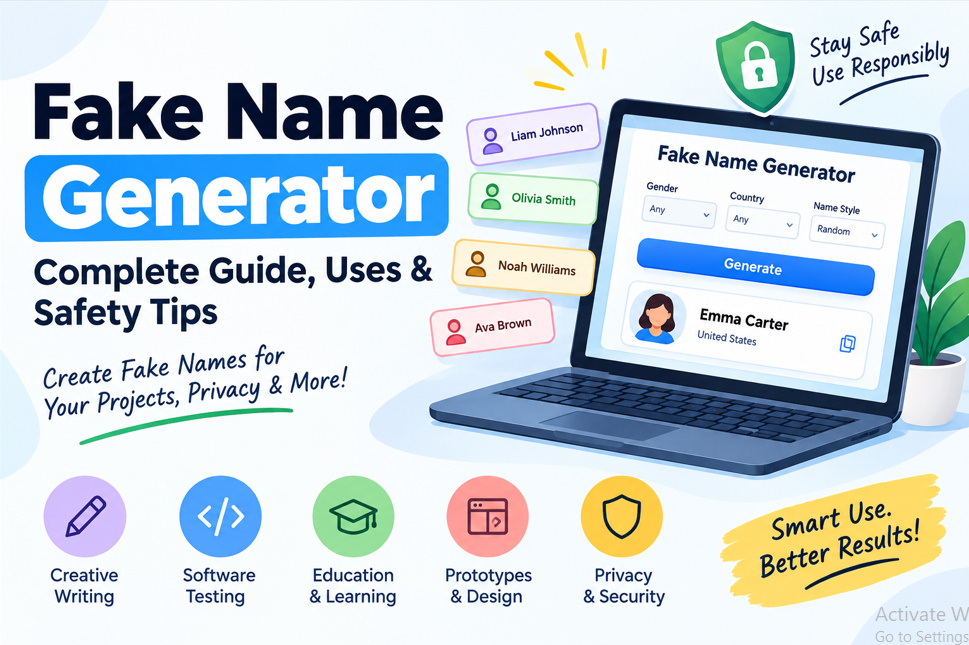
A fake name generator is an online tool designed to create fictional names quickly and conveniently. Instead of manually thinking about first names and surnames, users can generate random combinations within seconds. Depending on the tool, results may be based on gender, country, language, culture, naming style, or other preferences.
Although the phrase “fake name” can sound unusual, these tools have many legitimate applications. Writers can create character names, developers can generate test data, students can create examples, and designers can populate prototypes. The key is using generated information responsibly and avoiding deception, impersonation, or fraudulent activity.
What Is a Fake Name Generator?
A fake name generator is a digital tool that automatically creates fictional names using predefined databases, randomization techniques, or naming patterns. A basic generator may provide only a first and last name, while advanced tools can offer additional fictional details for testing, storytelling, demonstrations, and creative projects.
The generated information is generally intended to represent synthetic or fictional data rather than a real person’s identity. Users can often select preferences such as gender, nationality, location, or naming style. This makes the tool useful for generating realistic-sounding names that match a particular context or creative requirement.
- Creates random names
- Generates fictional identities
- Combines first and last names
- Supports creative projects
- Helps with brainstorming
- Produces synthetic information
- Saves research time
- Simplifies name selection
How Does a Random Name Generator Work?
A random name generator typically works by selecting names from a predefined collection and combining them according to programmed rules. The system may randomly choose a first name and surname, then display the combination instantly. More advanced tools can apply regional, cultural, linguistic, or gender-based filters.
Some generators use large databases containing thousands of names. When a user selects specific preferences, the system narrows the available options before producing a result. Randomization helps prevent repetitive results and allows users to generate multiple possibilities until they find a name suitable for their project.
- Uses name databases
- Applies random selection
- Combines name components
- Supports filters
- Uses naming patterns
- Offers regional choices
- Generates multiple results
- Produces instant suggestions
How to Use a Fake Name Generator
Using a fake name generator is usually simple, even for beginners. Start by selecting any available preferences, such as country, gender, language, or naming style. Then click the generate button to receive a fictional name. If the result does not suit your purpose, generate another option until you find one you like.
Before using a generated name, consider why you need it. For a fictional character, the name can support storytelling. For software testing, it can represent a sample user. For demonstrations, it can make a design look realistic without exposing actual personal information.
- Choose preferences
- Select a region
- Pick a gender
- Click generate
- Review the result
- Generate alternatives
- Copy the preferred name
- Use it responsibly
Legitimate Uses of Fake Names
Fake names have many practical and creative applications. Software developers can use fictional names when testing registration forms, databases, search functions, customer dashboards, and other features. Businesses can also use synthetic customer information when creating demonstrations, prototypes, presentations, and training materials.
Creative professionals can benefit from random name generation as well. Authors may need character names, game developers can create fictional personalities, and students can use sample names in assignments or demonstrations. Instead of spending excessive time brainstorming, a generator provides quick inspiration that can be refined manually.
- Software testing
- Database development
- Website prototypes
- Creative writing
- Character creation
- Game development
- Educational examples
- Business demonstrations
Fake Names for Privacy and Online Safety
A fictional name can sometimes be useful when creating examples or protecting unnecessary personal information. However, users should understand that changing a name does not automatically provide complete online privacy. Websites may collect technical information such as cookies, browser data, IP information, or account details.
For better privacy, avoid providing real personal information when it is unnecessary, but always follow the rules of the website or service you are using. A fake name should not be used to deceive an organization, bypass identity verification, impersonate another person, or obtain services through misleading information.
- Reduce unnecessary exposure
- Protect personal information
- Avoid sharing sensitive details
- Review privacy policies
- Understand website requirements
- Use synthetic information
- Avoid impersonation
- Practice responsible privacy
Fake Name Generator for Writers and Creators
Writers frequently need names that match a character’s personality, background, location, historical period, or role. A fake name generator can provide inspiration when creativity gets stuck. Instead of repeatedly searching for suitable names, writers can generate several options and select the one that best fits the story.
The tool is also useful for screenwriters, bloggers, game designers, role-playing enthusiasts, and content creators. A generated name does not have to become the final choice. It can serve as a creative starting point that helps develop a believable character, fictional family, imaginary business, or story world.
- Create character names
- Develop fictional personas
- Name game characters
- Build story worlds
- Generate character ideas
- Create fictional businesses
- Support brainstorming
- Improve creative workflow
Fake Name Generator for Developers and Testing
Developers often need realistic-looking sample information while building and testing applications. Using synthetic names can help populate databases and test registration pages, search systems, customer profiles, sorting features, filters, and user interfaces without unnecessarily using real people’s information.
Fake names are particularly useful during development because they make test environments appear more realistic. Developers can create numerous fictional records to examine how an application handles different lengths, combinations, characters, and naming patterns. Synthetic information should always remain within appropriate development or testing environments.
- Populate test databases
- Test registration forms
- Check search functions
- Test sorting systems
- Create sample customers
- Build demonstrations
- Test user interfaces
- Support QA processes
Safety, Ethics, and Best Practices
A fake name generator should be used for legitimate purposes rather than deception. Creating a fictional name for a story, prototype, classroom example, or software test is fundamentally different from pretending to be another person. Users should always consider the purpose behind generating and using fictional information.
Responsible usage also means understanding the limitations of generated data. A randomly generated name may accidentally match a real person. Therefore, avoid treating generated information as proof of identity. When working with applications or databases, clearly identify synthetic records and follow relevant organizational policies and legal requirements.
- Use fictional data responsibly
- Never impersonate others
- Avoid fraudulent activity
- Do not bypass verification
- Label test information
- Protect real identities
- Follow platform rules
- Use appropriate test environments
Frequently Asked Questions About Fake Name Generators
What is a fake name generator?
A fake name generator is an online tool that creates fictional names automatically. It can combine first names and surnames to produce realistic-looking results for creative, educational, testing, or demonstration purposes.
Is a fake name generator free?
Many fake name generators are available at no cost. Features can vary, with some tools offering basic random names while others provide additional customization options.
Can I use generated names for fictional characters?
Yes. Generated names can be excellent starting points for characters in novels, stories, games, scripts, role-playing campaigns, and creative projects.
Can developers use fake names for testing?
Yes. Synthetic names are useful for testing databases, forms, applications, search systems, dashboards, and user interfaces without relying unnecessarily on real customer information.
Are generated names always unique?
No. A generated name can coincidentally match the name of an existing person. Random generation does not guarantee that every result is completely unique.
Can I generate names from different countries?
Many generators provide regional or country-based options. These features can help users find names that better match particular languages, cultures, or naming conventions.
Does a fake name provide complete anonymity?
No. A fictional name only changes the name you provide. Other information, including technical data and account information, may still be collected by a website or service.
Can fake names be used for identity verification?
No. Generated names should not be used to bypass identity verification, financial controls, age restrictions, security systems, or other processes requiring accurate personal information.
A fake name generator is a convenient tool for creating fictional names for legitimate purposes. From character development and creative brainstorming to software testing and educational examples, it can save time and provide instant ideas. For the best experience, choose appropriate preferences, evaluate each result, and always use generated information ethically and responsibly.