

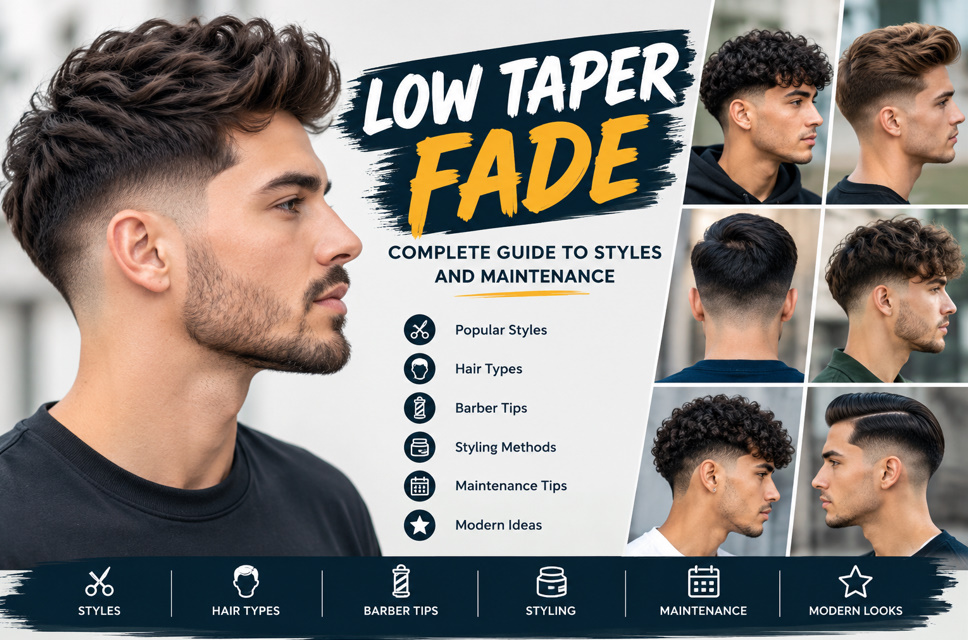
What Is a Low Taper Fade?
A low taper fade is a haircut where the hair gradually becomes shorter around the sideburns, ears, and neckline while most of the sides remain fuller. The transition stays low rather than climbing high toward the temples. This creates a clean, subtle appearance that works with short, medium, curly, or textured hairstyles.
The defining feature is the gradual blend between different hair lengths. Unlike a dramatic fade, the taper creates a smooth gradient that looks natural as it grows. The top can be styled in numerous ways, making the low taper fade a flexible foundation for modern and classic hairstyles.
- Low-positioned fade
- Clean sideburns
- Tapered neckline
- Smooth gradient
- Fuller side panels
- Flexible top length
- Natural appearance
- Versatile haircut
Low Taper Fade vs. Low Fade
Although the names sound similar, a low taper and low fade can create noticeably different results. A low taper concentrates the shortening around the sideburns and neckline, while a traditional low fade can remove more hair across the lower sides and create a broader faded area.
Choosing between them depends largely on the amount of side coverage you want. If you prefer a subtle haircut that preserves more of the natural shape of your sides, a low taper may be suitable. Someone wanting a more visible gradient across the lower sides may prefer a low fade.
- Low taper stays compact
- Low fade covers more area
- Taper preserves side fullness
- Fade creates stronger contrast
- Both use gradual blending
- Both work with short tops
- Both suit textured hair
- Barber communication matters
Popular Low Taper Fade Styles
One reason the low taper fade remains adaptable is that the top can be customized extensively. Popular combinations include textured crops, curly tops, waves, side parts, slicked-back styles, longer fringes, and short cuts. The taper provides a clean foundation while the top determines much of the haircut’s overall character.
A low taper fade can also be combined with carefully shaped facial hair or a natural neckline. For a more understated appearance, keeping the blend soft and the top moderately short can create a tidy result. More texture or length on top creates additional styling possibilities.
- Classic low taper
- Curly low taper
- Textured low taper
- Low taper with waves
- Low taper crop
- Low taper side part
- Low taper with fringe
- Low taper with longer top
Low Taper Fade for Different Hair Types
A low taper fade can be adapted to straight, wavy, curly, and coil hair. The taper remains concentrated around the lower edges, while the barber adjusts the surrounding blend according to hair density, texture, curl pattern, and desired top length.
For straight hair, texture can add movement and volume. Wavy hair can emphasize its natural pattern, while curly and coil hair can retain substantial volume on top. The important consideration is communicating how much length and natural texture you want preserved rather than requesting a generic fade.
- Straight hair
- Wavy hair
- Curly hair
- Coil hair
- Thick hair
- Fine hair
- Textured hair
- Natural curls
How to Ask Your Barber for a Low Taper Fade
Clear communication can make a major difference when requesting this haircut. Tell your barber that you want a low taper around the sideburns and neckline and explain how much length you want to retain on the sides. If you have a particular top style in mind, describe that separately.
A reference photograph can also help communicate the desired shape, especially if you’re unfamiliar with haircut terminology. Mention whether you want a softer taper, a shorter finish, or more length around the sides. You can also ask your barber about the clipper guard length before cutting.
- Say “low taper”
- Specify side length
- Explain neckline preference
- Discuss sideburn shape
- Describe the top
- Mention desired texture
- Bring a reference photo
- Confirm before going shorter
How to Style a Low Taper Fade
Styling mainly focuses on the hair left on top because the tapered areas require comparatively little daily styling. A lightweight cream, paste, clay, or another suitable styling product can help create different finishes depending on your hair texture and preferred appearance.
For a textured look, use your fingers to create separation and movement. A comb can help produce a side part or smoother finish. Curly and wavy hair can benefit from products designed to define natural texture. Keep product use moderate to avoid unnecessary buildup.
- Start with clean hair
- Towel-dry gently
- Use small product amounts
- Style according to texture
- Finger-style for texture
- Comb for neat finishes
- Define natural curls
- Avoid excessive buildup
Low Taper Fade Maintenance Tips
Like other fades, a low taper eventually loses its crisp appearance as the hair grows. The exact maintenance schedule varies according to individual growth speed and how sharp you want the haircut to remain. Many people choose to refresh the taper every few weeks while allowing the top to grow naturally.
Simple grooming habits can help the haircut remain presentable between barber appointments. Keep the hair and scalp clean, maintain the desired shape on top, and avoid unnecessary trimming if you are not confident using clippers. A professional cleanup can restore the original blend without changing the overall style.
- Schedule regular trims
- Keep the neckline tidy
- Maintain sideburns
- Wash appropriately
- Remove product buildup
- Condition when needed
- Style the top consistently
- Let professionals handle complex blends
Why Choose a Low Taper Fade?
The low taper fade offers a balance between a clean haircut and natural-looking length. Because the taper remains low, it does not dramatically change the appearance of the entire side profile. This makes it useful for people who want a modern haircut without choosing a very high or pronounced fade.
Another advantage is versatility. The same basic taper can support different hairstyles as your preferences change. You can keep the top short, grow it longer, emphasize natural curls, or add texture without necessarily changing the low taper foundation.
- Subtle appearance
- Versatile styling
- Easy daily grooming
- Works with many textures
- Keeps side fullness
- Adaptable top length
- Suitable for varied settings
- Natural-looking grow-out